
Mental Training in Sports Performance Unlocking Resilience Focus and Winning Mindset
A strong body can carry an athlete far. A trained mind helps them finish the job when the pressure rises, the crowd gets loud, and the outcome is still in doubt.
Sport is full of physical demands: speed, strength, endurance, skill, recovery, and repetition. Yet the moments that often decide performance happen inside the athlete’s mind. A missed shot. A slow start. A bad call. A mistake at the wrong time. A championship point. A comeback attempt when fatigue has already set in.
This is where mental training matters.
Mental training is the practice of building the psychological skills that support performance. It helps athletes stay calm, focused, confident, and resilient when competition becomes uncomfortable. It does not replace physical training. It strengthens it. When the mind and body work together, athletes can compete with more control, consistency, and belief.

Why mental training belongs in every athlete’s routine
Most athletes spend hours working on technique. They repeat footwork, shooting form, starts, turns, serves, routes, swings, and conditioning drills. The goal is to make those skills reliable under pressure.
Mental skills need the same approach.
Confidence, focus, emotional control, and composure are not fixed traits. They can be practiced. An athlete can learn how to respond after a mistake, how to reset between plays, how to calm nerves before competition, and how to picture success before executing a skill.
Pressure does not usually create new problems. It reveals habits.
If an athlete has trained only for ideal conditions, competition can feel chaotic. If they have also trained their mind, they have tools to return to the present moment. They know what to do when fear, frustration, or doubt shows up.
Strong mental training can help athletes:
Stay focused during high-pressure moments
Recover faster after mistakes
Build confidence through preparation
Manage nerves before competition
Handle setbacks without losing direction
Improve consistency in practice and games
Compete with a clearer sense of purpose
The best athletes are not calm because they never feel pressure. They perform well because they have practiced how to function while pressure is present.
Mental resilience turns setbacks into fuel
Every athlete faces adversity. Injuries, losses, slumps, missed opportunities, tough coaching, and personal stress can test even the most talented competitors. Physical ability may open the door, but mental resilience helps an athlete keep walking through it.
Resilience is not pretending disappointment does not hurt. It is the ability to respond with intention instead of panic. A resilient athlete can take feedback, adjust, and keep working. They can separate one poor performance from their identity. They can learn from failure without carrying it like a permanent label.
Think about Serena Williams. Across her career, she became known not only for power and skill, but for her ability to compete through pressure. Her comebacks, intensity, and belief under stress showed how much the mental side can shape elite performance.
Michael Jordan is another example often tied to resilience. He has spoken many times about failure as part of success. His career is remembered for championships and iconic shots, but his mindset toward missed shots and losses helped define how athletes think about competitive response.
Resilience grows when athletes train how they interpret challenges. A setback can become proof that they are not good enough, or it can become information. That difference matters.
A practical resilience routine can include:
Writing down one lesson after each practice or game
Naming what can be controlled before competition
Reframing mistakes as feedback
Practicing positive self-talk during hard drills
Building recovery habits after disappointment
The goal is not to avoid frustration. The goal is to return to effort, learning, and execution faster.

Focus is the skill that keeps talent on track
Talent can fade in a distracted mind. Focus keeps an athlete connected to the next play, the next rep, and the next decision.
In competition, attention gets pulled in many directions. Athletes may think about the score, the crowd, the opponent, a previous mistake, a future outcome, or what a coach might say. When attention drifts too far into the past or future, performance usually suffers.
Focus brings the athlete back to what matters now.
This does not mean blocking out everything. Great competitors often notice what is happening around them, but they know where to place attention. A tennis player may focus on breathing and the toss before a serve. A goalkeeper may focus on positioning and the shooter’s body shape. A sprinter may focus on the first drive phase rather than the finish line.
Novak Djokovic has often been associated with mindfulness, breathing, and mental discipline. His ability to stay composed through long matches is part of what has made him one of the most successful tennis players in history. The physical skill is clear, but the attention control is just as striking.
Tom Brady also built a reputation for preparation, poise, and late-game composure. Quarterback play demands constant decision-making under pressure. The ability to stay clear, process information, and execute when time is limited shows how focus influences performance.
Athletes can train focus with simple tools:
Use a reset word between plays
Take one slow breath before a key action
Pick one cue for each drill
Practice with noise or distractions
Create a short pre-performance routine
Review whether attention stayed on the task, not just the result
Focus improves when it has a target. “Concentrate harder” is too vague. “Watch the ball into the glove” or “drive through the first three steps” gives the mind a clear job.
Visualization helps the brain rehearse success
Visualization, also called mental imagery, is the practice of creating a clear mental picture of a performance before doing it. Athletes use it to rehearse skills, prepare for pressure, and build confidence.
Good visualization is not daydreaming. It is detailed, active, and connected to real performance. The athlete imagines the setting, the movement, the timing, the emotions, and the response to challenges.
Michael Phelps is one of the most famous examples of an athlete who used visualization. He and his coach Bob Bowman have discussed how Phelps mentally rehearsed races, including possible problems. This helped him feel prepared when things did not go perfectly, such as when his goggles filled with water during the 2008 Olympics. He still won that race, and his preparation became part of the story.
Visualization works best when athletes include both success and response. Picture the ideal performance, then picture handling a mistake with calm and control. That second part is often where confidence grows.
A useful visualization session can be short:
Sit or stand in a quiet place.
Take three slow breaths.
Picture the performance environment.
Imagine one specific skill in detail.
Feel the rhythm, speed, and body position.
See a challenge appear.
Practice responding with control.
End with a clear image of effort and execution.
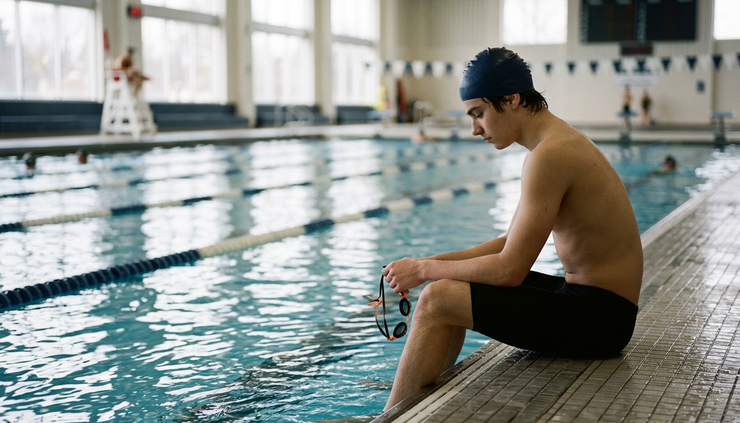
The more realistic the image, the better. A soccer player might imagine the feel of the turf, the sound of teammates, the weight of the pass, and the target area of the shot. A swimmer might picture the blocks, entry, stroke count, turn, and finish.
Mental rehearsal helps athletes arrive at competition feeling like they have already been there.
Successful athletes train the mind as part of the craft
At the elite level, athletes often look physically different from everyone else. They are faster, stronger, more skilled, and more experienced. Yet many of them also treat mental preparation as a normal part of training.
Simone Biles brought wide attention to the mental side of sport when she stepped back from events at the Tokyo Olympics to protect her safety and well-being. Her choice showed that mental readiness is not a bonus. In sports with high risk and high precision, it can be central to safe performance.
Kobe Bryant was widely known for his intense mindset and consistent routines. His approach to preparation influenced athletes across sports. While many people remember the phrase connected to his competitive mentality, the deeper lesson is repetition, focus, and a serious commitment to improvement.
Naomi Osaka has spoken publicly about pressure and mental health in professional tennis. Her experience helped many fans and athletes better understand that performance does not happen in isolation. Emotional load, expectations, travel, public attention, and personal well-being can all affect how an athlete competes.
These examples point to a shared truth: mental strength is not about acting emotionless. It is about self-awareness, preparation, and the ability to choose a useful response.
Practical ways to add mental training to daily practice
Mental training works best when it becomes part of the routine. It does not need to take an hour. In many cases, five to ten focused minutes can make a real difference when practiced often.
Start with breathing
Breath is one of the fastest ways to influence the body’s stress response. Before a drill, competition, or recovery session, athletes can use slow breathing to settle the nervous system.
Try this:
Inhale for four counts
Hold for two counts
Exhale for six counts
Repeat for three to five rounds
Longer exhales can help lower tension and bring attention back to the present.
Build a reset routine
Mistakes happen. A reset routine tells the brain what to do next.
A reset can be simple:
Step back
Take one breath
Use a short cue word
Return eyes to the task
Recommit to the next action
Good cue words are short and personal. Examples include “next,” “smooth,” “attack,” “steady,” or “finish.”
Practice self-talk that is useful
Self-talk does not need to be fake or overly positive. It needs to help performance.
Instead of “I can’t mess this up,” use “Trust the work.”
Instead of “I always choke,” use “Breathe and execute.”
Instead of “This is too hard,” use “One rep at a time.”
Words shape attention. Helpful self-talk gives the athlete a direction.
Use visualization before and after practice
Before practice, visualize one skill you want to perform well. After practice, replay one strong moment and one moment you want to improve. This builds awareness without turning every session into criticism.
Train pressure in small doses
Pressure can be practiced. Coaches and athletes can create situations that feel challenging:
Time limits
Score-based drills
Consequences for missed assignments
Crowd noise
Fatigue before skill work
Must-make reps at the end of practice
The point is not to create fear. The point is to help athletes learn how to stay present when the stakes feel higher.
Keep a mental performance journal
A short journal builds self-awareness. After practice or competition, answer three questions:
What did I do well mentally?
When did my focus slip?
What will I practice next time?
Over time, patterns become clear. The athlete starts to see which thoughts help, which habits hurt, and which routines create better performance.

The winning mindset is built before the big moment
A winning mindset is not just confidence after success. It is the daily choice to prepare with purpose, respond to setbacks, and stay connected to the next action.
Mental training gives athletes a system for doing that. It turns vague ideas like toughness and focus into skills that can be practiced. It helps athletes compete with more freedom because they know how to handle pressure. It helps them recover from mistakes because they have trained a response. It helps them trust their preparation because they have rehearsed the moment before it arrives.
The mind leads performance more often than athletes realize. Train it with the same respect you give strength, speed, and skill.
For athletes, teams, and coaches ready to build stronger mental habits, visit 1st Look Sport Boam for professional mental training services. The right support can help turn preparation into confidence, pressure into focus, and potential into performance.


Comments